God Our Father
Recently I’ve been reading and re-reading Kenneth Bailey’s “Jesus Through Middle Eastern Eyes”, which has been eye-opening to my modern western eyes!
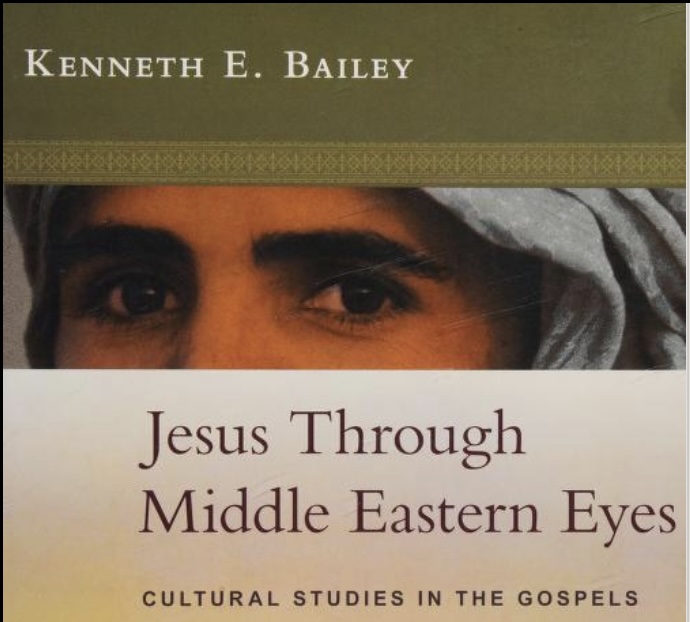
Among many other topics, Ken spends significant time on the Lord’s Prayer…
When Jesus instructed his disciples how to pray, he made an unusual choice for addressing God: “Abba”, that is, “Our Father”.
“Abba” is Aramaic, the common language for daily communication of that day. The Aramaic-speaking Jew was accustomed to saying their prayers in Hebrew, not Aramaic. By choosing Aramaic instead of Hebrew, Jesus set a precedent of enormous significance: Christianity, unlike Judaism and Islam, does not have a sacred language.
If there is no sacred language, then there is no sacred culture. Besides “Abba”, Jesus had many options to choose from: “Redeemer of Israel”, “God of Abraham, Isaac, and Jacob”, “Builder of Jerusalem”, “God of our fathers”, which were all titles in books of prayers in use during his time. These are all legitimate, but carry a national component. But “Abba” is usable by every human being, of any tribe or nation.
With this opening address, as in so many other ways, Jesus laid a foundation for worship of God in all languages and cultures. Today, more than two billion identify as Christian.
Also unusual is what Jesus did NOT do: prescribe a particular time to pray. The pious of Jesus’s day prayed three times per day: At sunrise, at three in the afternoon, and at sundown.
Because of the pattern of prayer that Jesus established, believers everywhere are able to commune with God our Father at any time of the day or night, using the language of the heart.
–From Chapter 7, “The Lord’s Prayer”, in Kenneth Bailey’s “Jesus Through Middle Eastern Eyes”